PROJECT OVERVIEW
Book Freelancer is a location based marketplace designed to connect customers with trusted physical service providers such as cleaners, handymen, movers, and home maintenance professionals. The platform simplifies the process of finding, booking, and managing home services through a structured and secure experience. I led the full product design from concept to high fidelity system, defining the product architecture, user journeys, service structure, booking logic, and scalable UI framework. The goal was to eliminate the chaos and uncertainty people experience when hiring local service providers.
DESIGN PROCESS
The design process moved through four clear phases. Each phase had its own deliverables, but every decision was always weighed against the next phase to keep the product cohesive end to end.
PROBLEM
Hiring someone to enter your home is a high trust decision, yet most local service marketplaces are fragmented, inconsistent, and unreliable. Customers often struggle with unclear pricing, slow communication, uncertain availability, and lack of accountability. Many rely on scattered classified platforms or outdated directories that provide little verification or structured booking.
Platforms such as TaskRabbit, Thumbtack, and Angi attempt to solve this problem, but they often rely heavily on request based quotes, back and forth messaging, and manual coordination. This increases friction and slows down decision making. There was an opportunity to create something more structured, predictable, and trust centered.

THE OPPORTUNITY
I identified a gap between classified listings and fully managed service platforms. Book Freelancer was positioned to introduce a booking first model for physical services. Instead of endless negotiations, customers can select predefined service packages with clear pricing, scope, and duration.
The concept borrows the clarity of hospitality booking systems and applies it to local service hiring. Customers know exactly what they are getting, how much it costs, and when it will be delivered.
MY ROLE
I led the entire product design process. I defined the service structure, designed the discovery experience, mapped booking flows, created both customer and provider dashboards, and built a scalable design system to support growth across multiple service categories.
SOLUTION
The solution was a structured booking marketplace built around predefined service packages, real time availability, verified provider profiles, and a clear step by step booking flow. Every screen was designed to remove negotiation friction and replace it with predictability, the same way modern hospitality platforms removed it from hotel booking.

COMPETITORS ANALYSIS
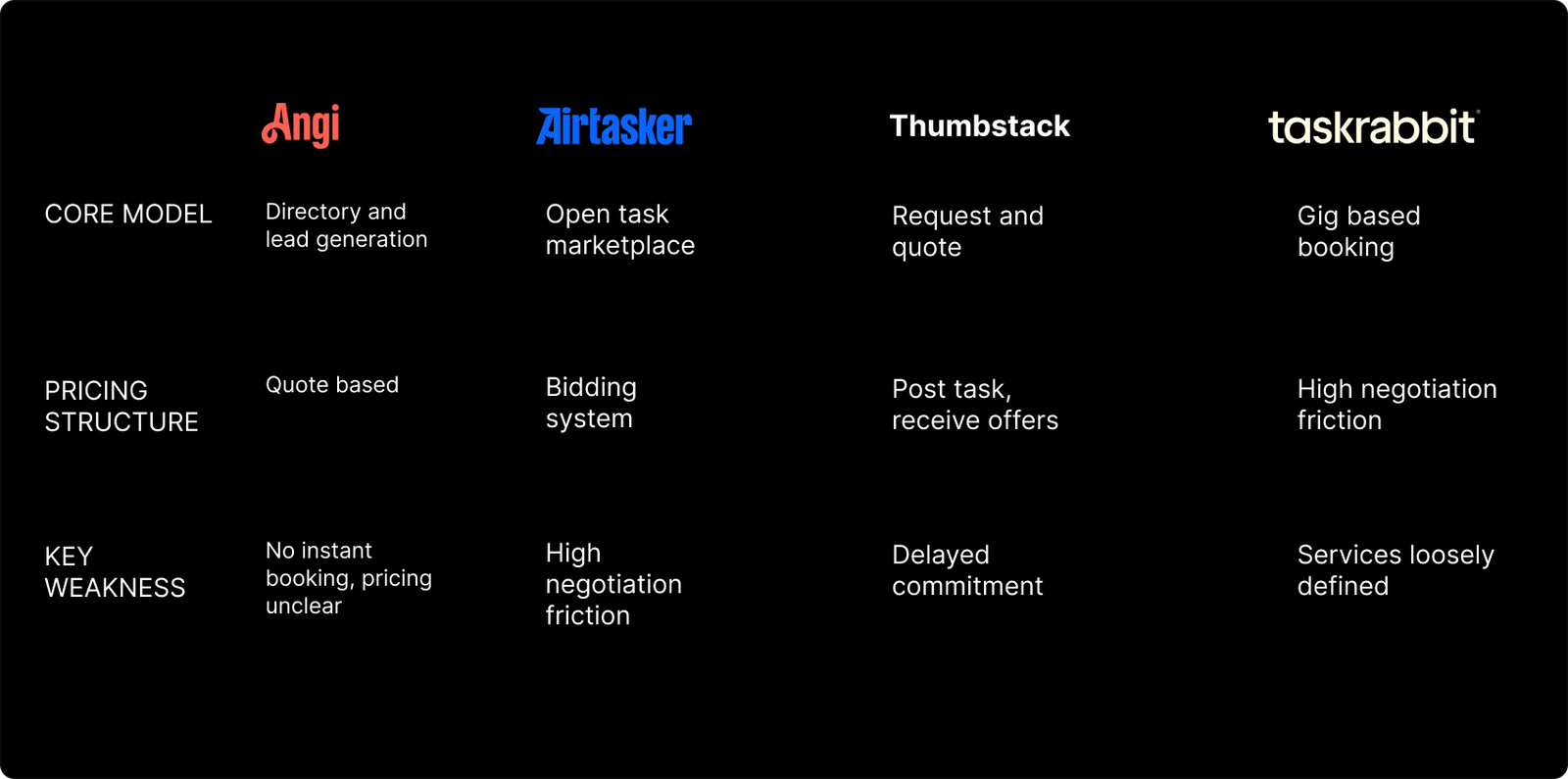
To position Book Freelancer correctly, I analyzed the leading local service platforms to understand their structural models and weaknesses. The main competitors were Angi, Airtasker, Thumbtack, and TaskRabbit. Each one relied on quote based, bidding, or request and respond models, all of which introduced delay and uncertainty into the customer experience.
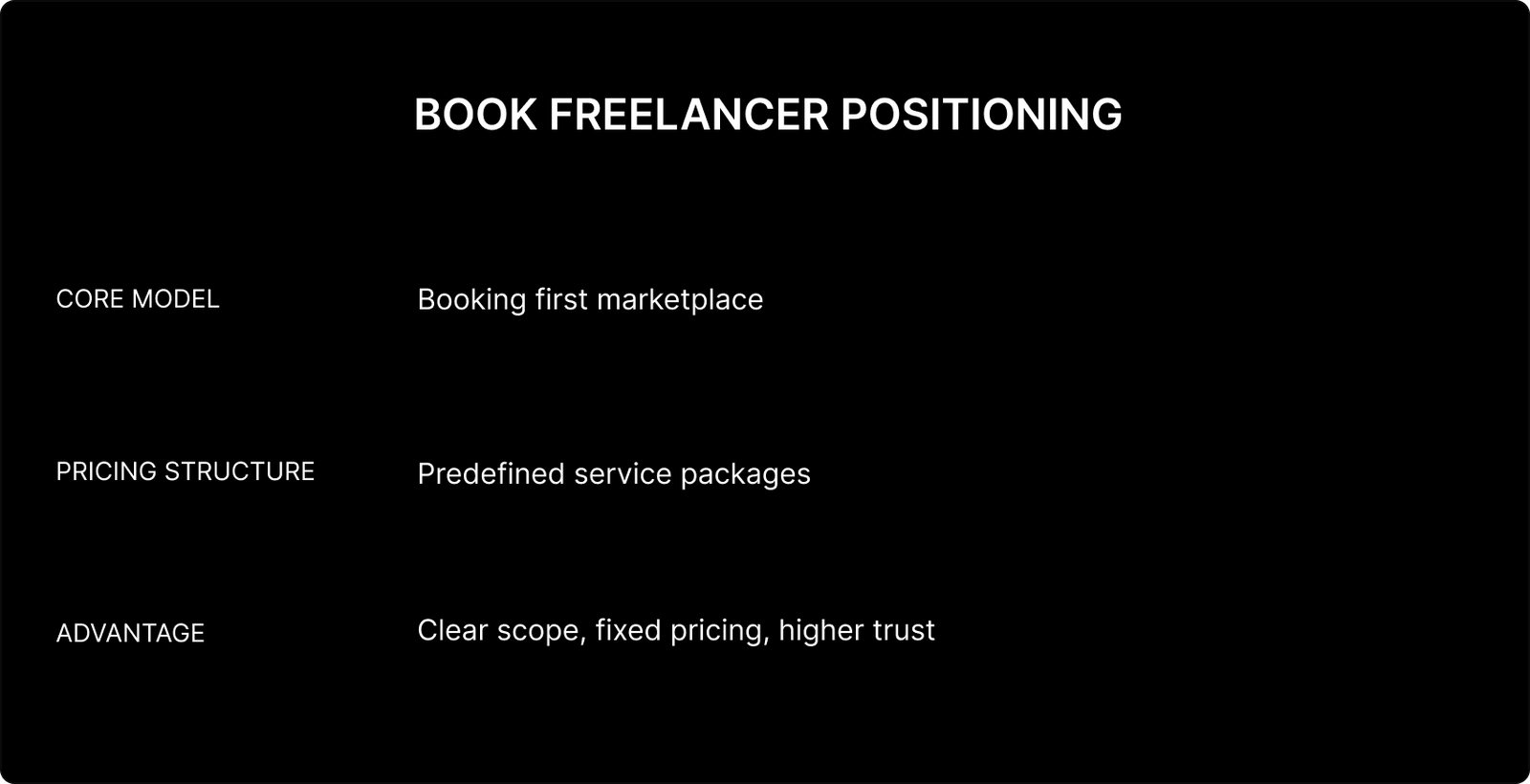
Where every competitor created friction through negotiation, Book Freelancer was positioned with a booking first marketplace, predefined service packages, structured step by step checkout, and clearer scope and faster pricing decisions for the customer.
RESEARCH
Before designing Book Freelancer, I structured a focused research plan to understand how people currently hire local service professionals and where friction exists in the process. Hiring someone to enter your home is a high trust decision, so the research aimed to uncover behavioral patterns, emotional concerns, pricing expectations, and operational pain points from both customers and service providers. Defining the research structure before conducting analysis ensured clarity, consistency, and insight driven product decisions throughout the entire design process.
Research Plan Overview
3 IMPORTANT INTERVIEW TAKEAWAYS
I ran one on one interviews with active and potential users of local service marketplaces. The same friction kept surfacing across every conversation. Three takeaways stood out and went on to directly shape the product.
Q. What frustrates you most about hiring through current platforms?
The majority of participants pointed to unclear pricing and waiting for quotes as their biggest frustration. Users expressed that submitting requests and waiting for responses creates uncertainty and delays decision making.
Q. What makes a service professional feel trustworthy enough to enter your home?
Participants consistently mentioned verified profiles, visible reviews, and completed job history as key trust signals. Several respondents emphasized that consistency in profile structure increases confidence, while incomplete profiles create hesitation.
Q. How do you feel about fixed pricing and predefined service packages compared to quote based systems?
Most participants favored predefined packages with clear scope and duration. They stated that fixed pricing reduces anxiety, eliminates negotiation pressure, and makes the booking process feel more structured and professional.
USER PERSONA
Insights from research shaped a persona that anchored every product decision. Cynthia represents the independent homeowner managing a busy work schedule who values efficiency, transparency, and trust when hiring home service professionals.
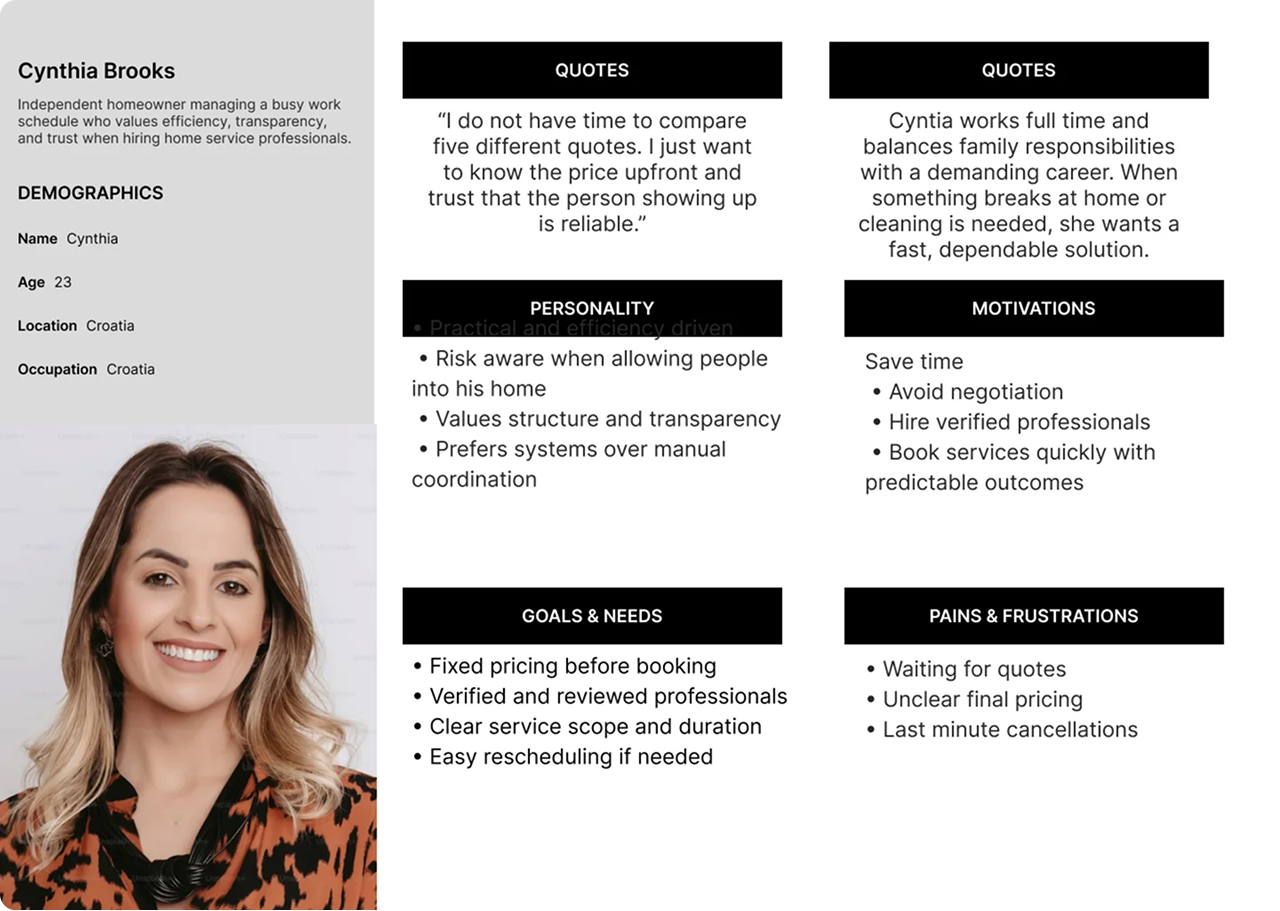
Goals & Needs
Pains & Frustrations
RESEARCH KEY FINDINGS
The consensus from competitor analysis and user interviews revealed consistent friction in how people hire local service professionals. Two findings shaped the product direction more than anything else.
IDEATION — USER STORIES
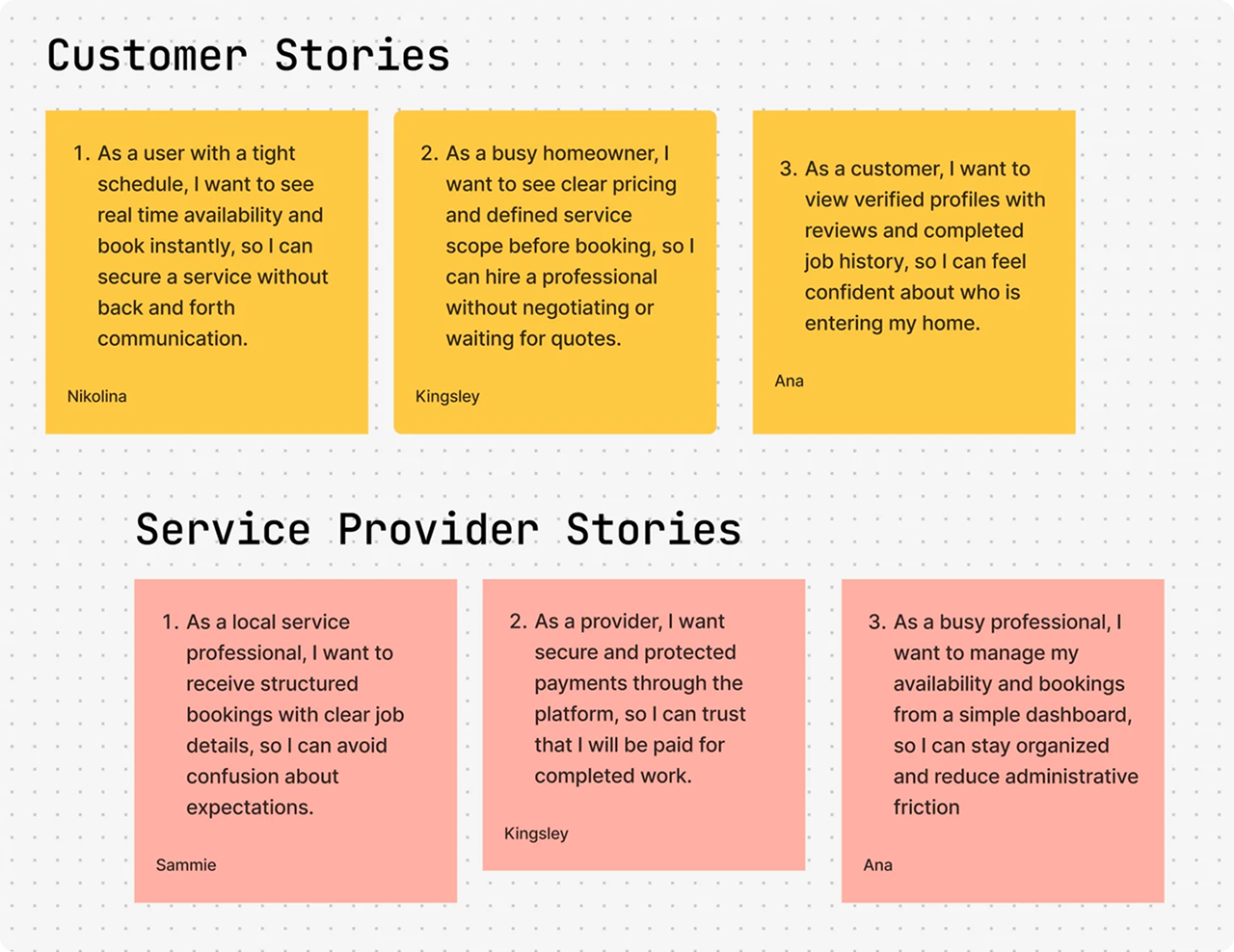
Insights from research were distilled into user stories that shaped the core experience of Book Freelancer. As a customer, I want to see exactly what a service includes and how much it costs before I commit. As a homeowner, I want to feel confident that the person entering my space is verified and reviewed. As a busy professional, I want to book a service in minutes without negotiating back and forth. As a service provider, I want consistent, structured bookings that reduce administrative friction and protect my time. These stories directly informed the platform's booking first structure, predefined service packages, and trust centered design system.
LO-FI WIREFRAME SKETCHES
I created quick pen and paper wireframes to explore structure and flow before moving to high fidelity screens. Sketching by hand helped ideas move faster and allowed me to identify layout and booking logic early. These low fidelity sketches formed the foundation of the final design.

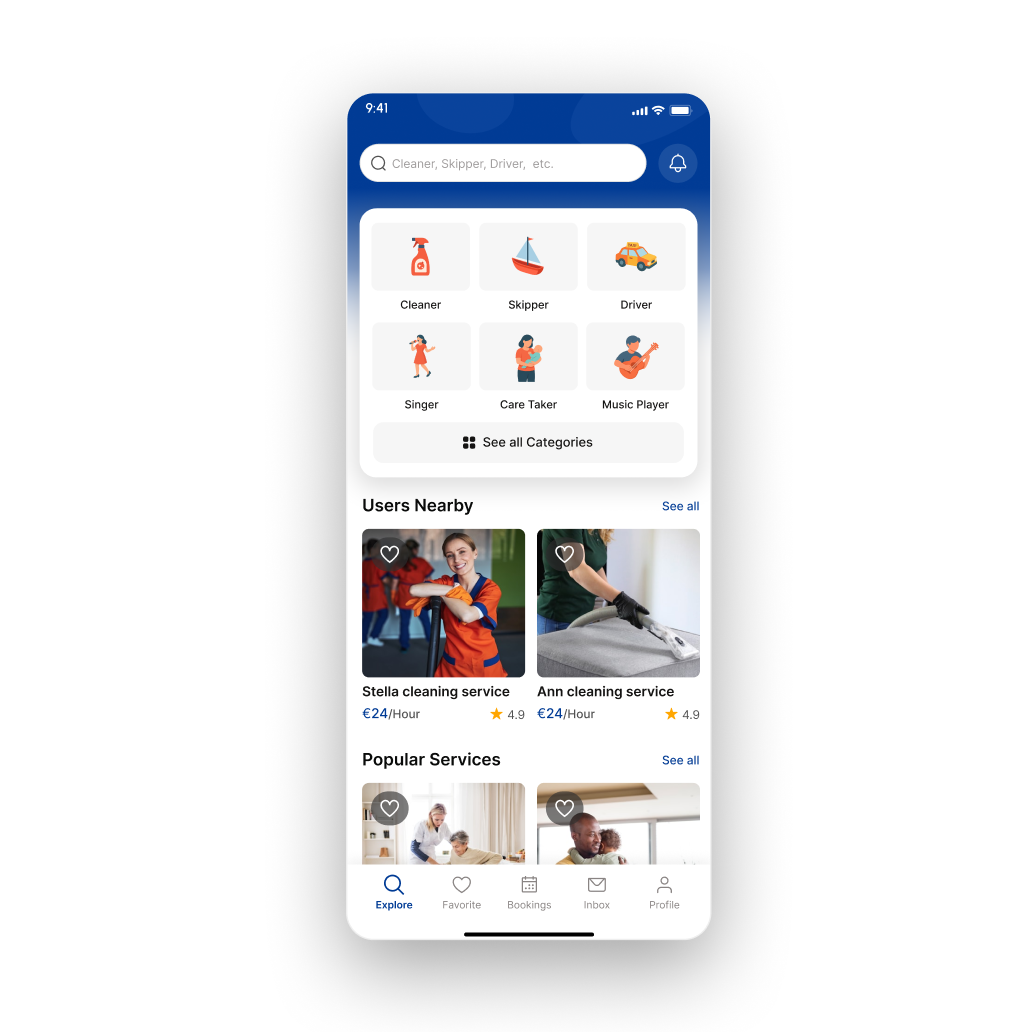
HI-FI WIREFRAME SKETCHES — USER HOMESCREEN
The home screen is designed for fast discovery and immediate action. Users can search for services at the top, browse popular categories through visual icons, and view nearby professionals with ratings and pricing at a glance.
SERVICE PROVIDER HOMESCREEN
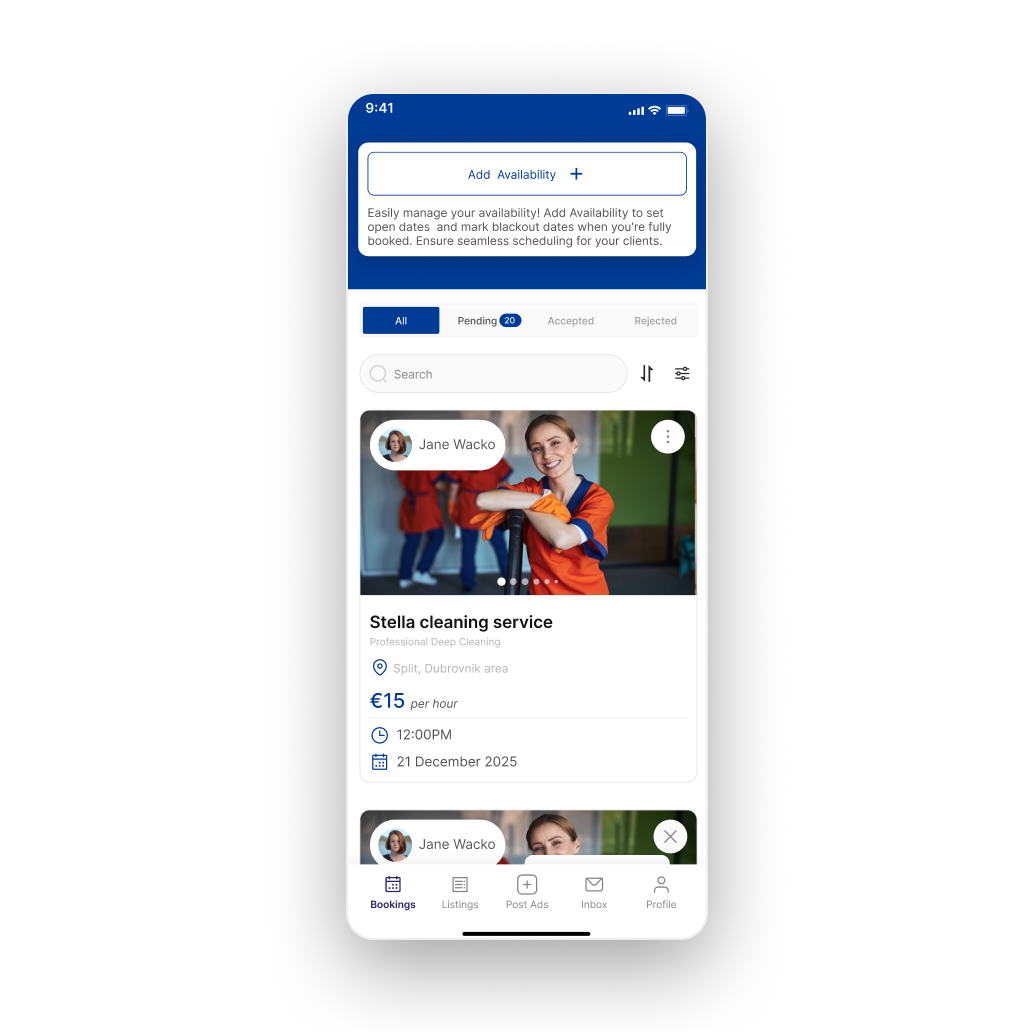
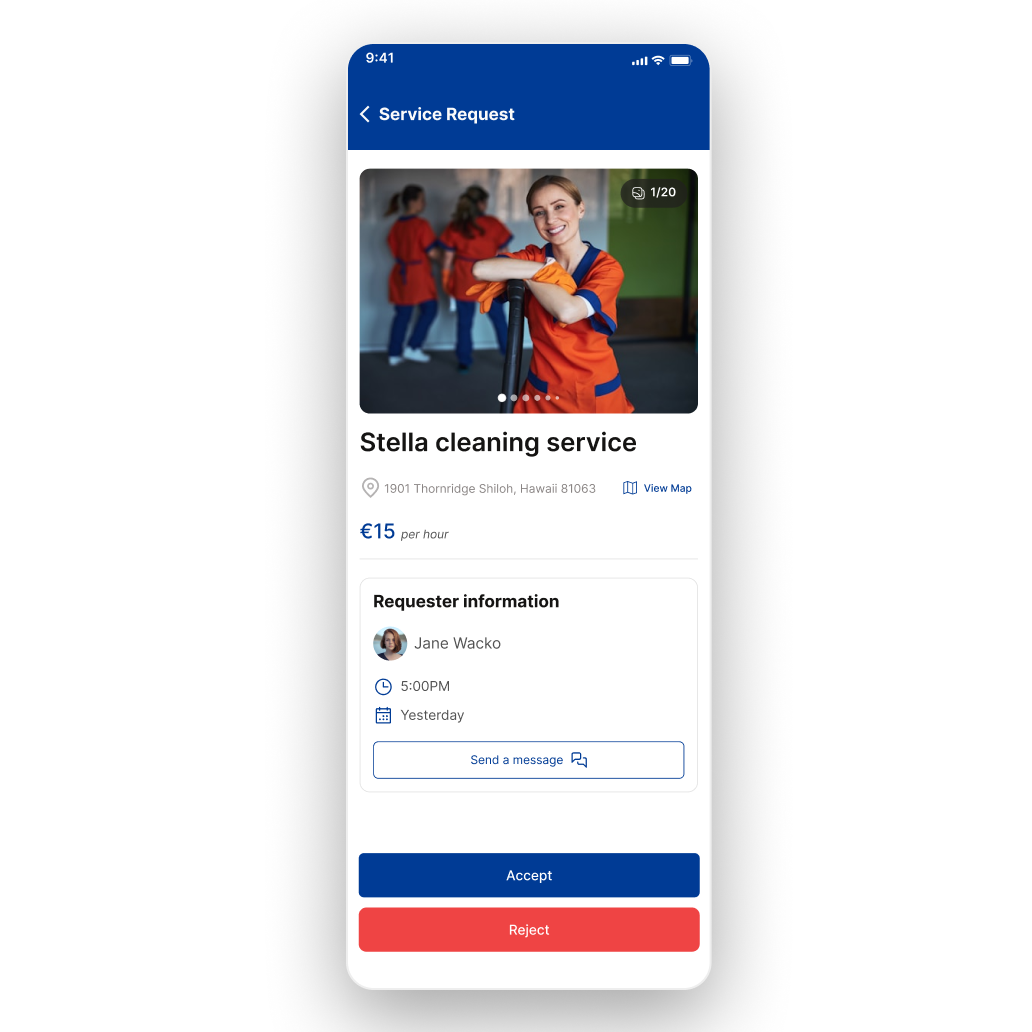
The provider dashboard centralizes availability management and incoming service requests. Clear status tabs, structured booking cards, and quick accept or reject actions allow professionals to manage jobs efficiently while reducing administrative friction.
LOGO EXPLORATION & BRANDING
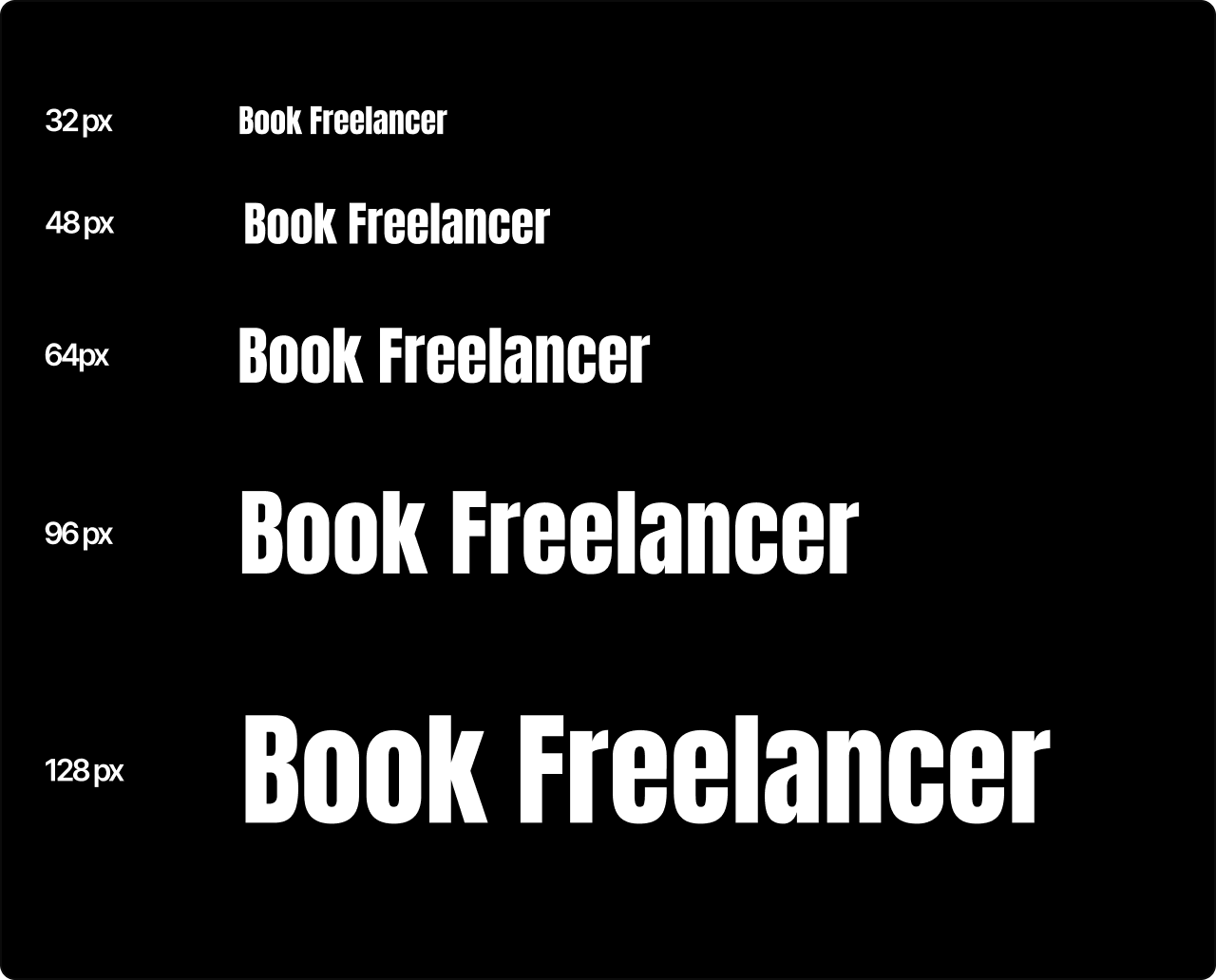
The Book Freelancer logo was crafted to reflect trust, scale, and accessibility. I chose a bold, clean typographic treatment to communicate reliability and clarity, reinforcing the structured and professional nature of the platform.
The globe symbol represents service providers distributed across different parts of the city. It visually communicates connection, reach, and the idea that trusted professionals are available wherever the user is located.


USER TESTING — USABILITY TESTING NOTES
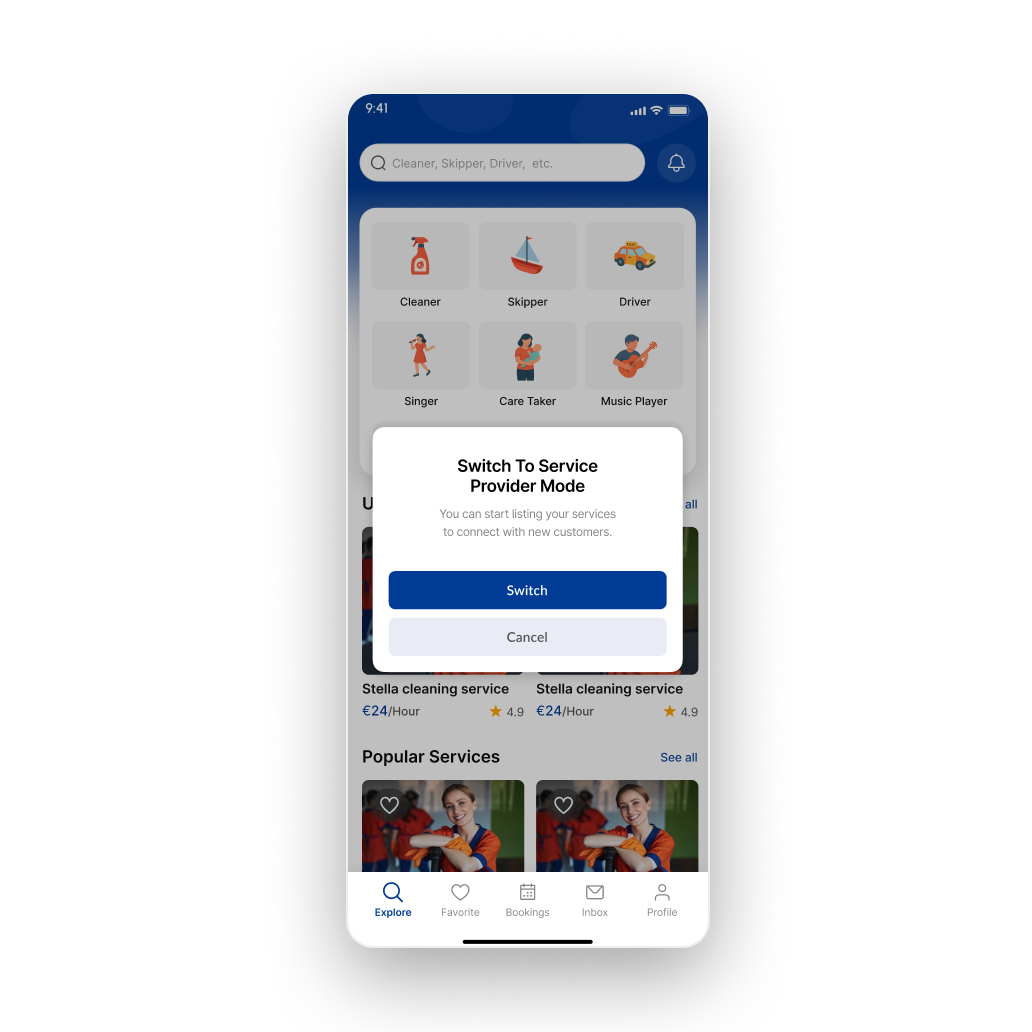
One on one remote usability sessions were conducted with active and potential users of local service marketplaces. Sessions focused on discovery clarity, switching between customer and provider mode, trust signals, and how quickly users could complete a booking or manage a request.
Participants
Interview Insights
Opportunities
INTERVIEW QUANTITATIVE RESULTS
Two questions captured how confident participants felt navigating the prototype and switching contexts inside the app.
Q1. How easy was it to understand the app flow for finding a service and booking a provider, from 1 very difficult to 10 very easy?
Q2. How confident did you feel about switching between customer and provider mode and finding support if needed, from 1 not confident to 10 very confident?
After completing usability interviews, insights were organized using affinity mapping to identify recurring patterns and themes across participant feedback. Notes from each session were grouped based on shared behaviors, concerns, and motivations, allowing patterns to emerge naturally without imposing assumptions.
FEEDBACK REVISION — ONBOARDING PREVIEW
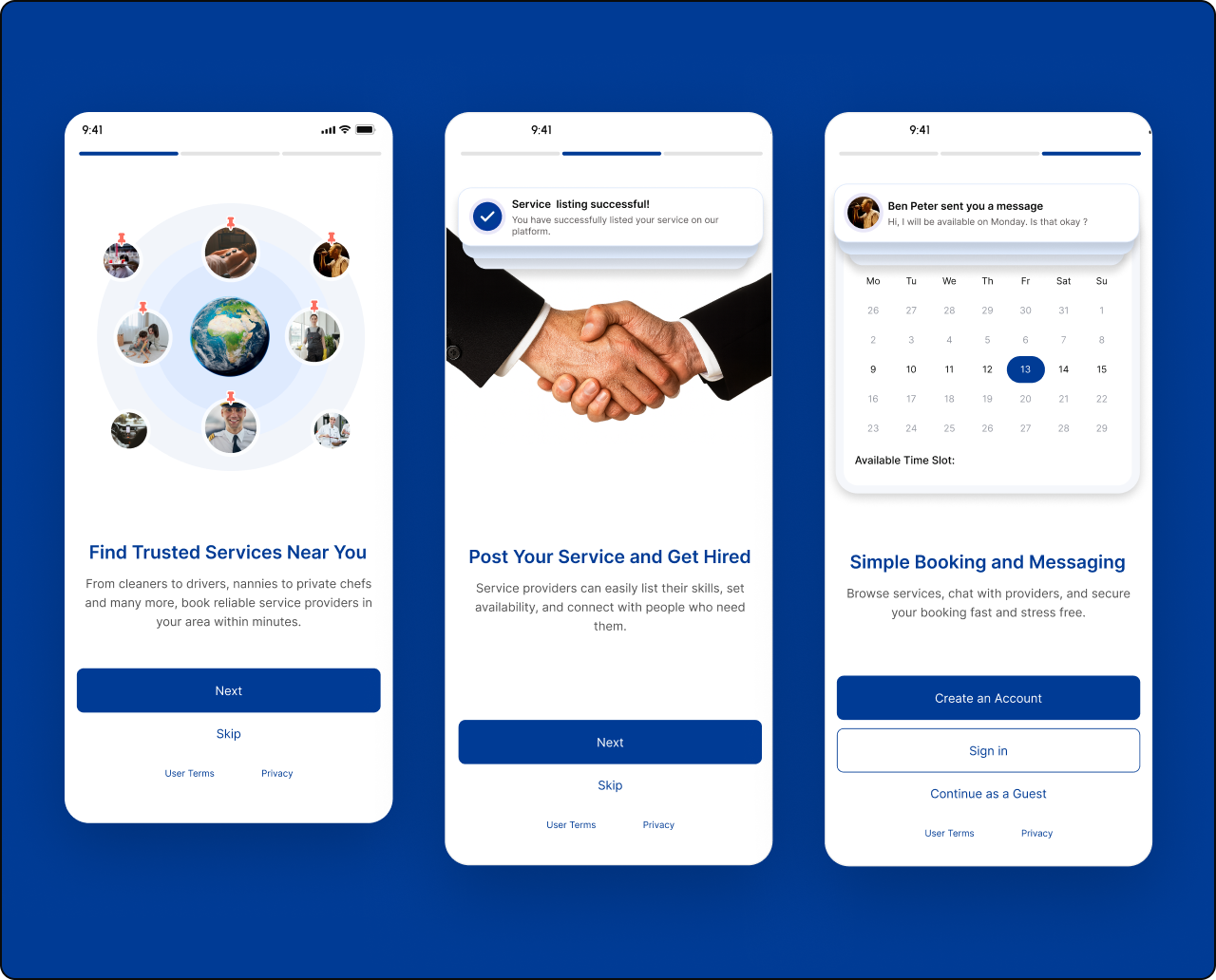
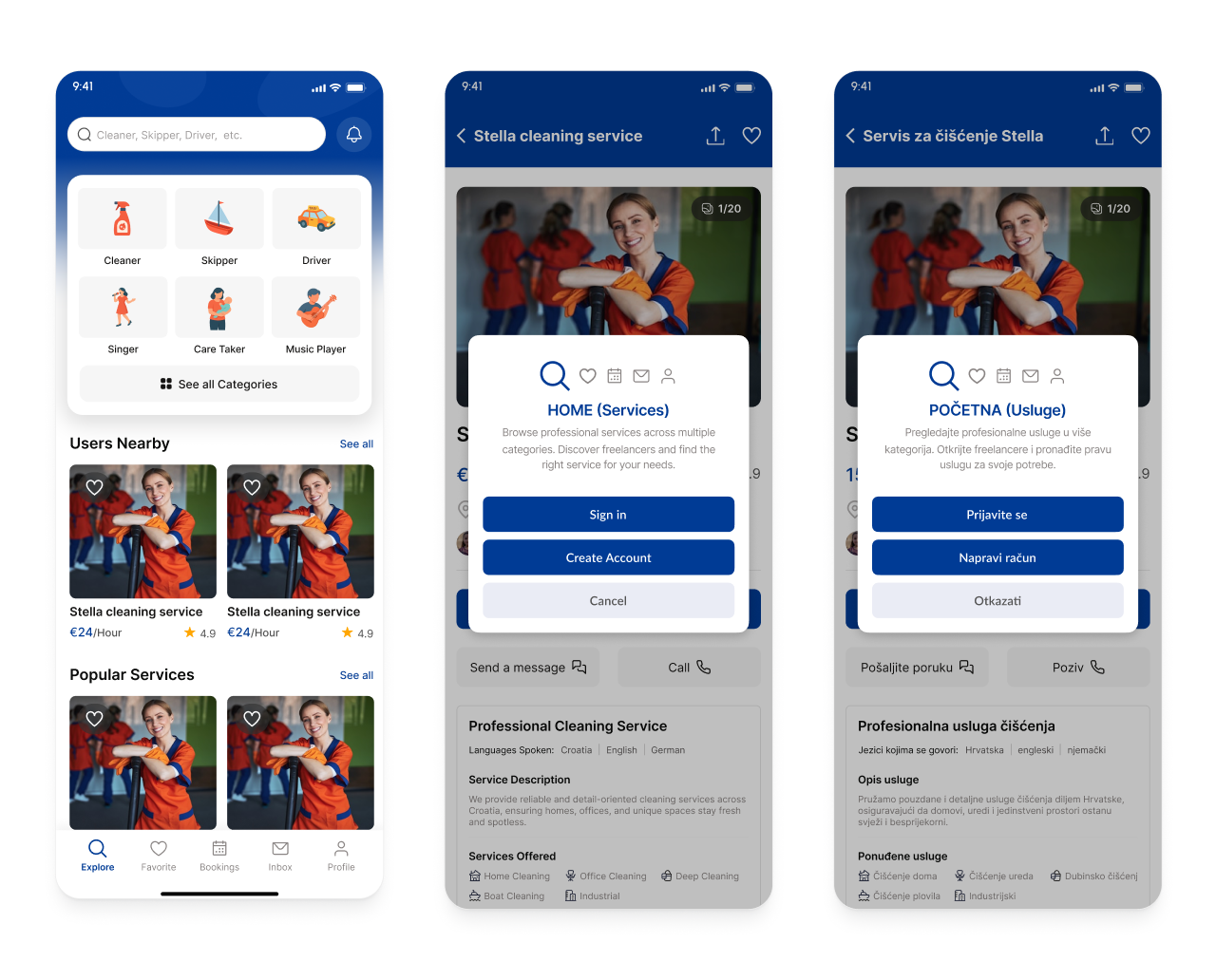
Some users hesitated to sign up without first understanding how the platform works. They wanted to explore services and get a sense of the experience before committing to account creation.
In response, I introduced a lightweight preview flow that allows users to browse categories and view sample provider profiles before signing up. This reduced friction at the entry point and increased onboarding confidence.
SUPPORT SECTION
Participants expected immediate access to help, especially during booking, cancellations, or service disputes. The absence of a clearly visible support entry point reduced confidence in the platform.
To address this, I introduced a dedicated support section with direct customer care chat access. The support entry point is now consistently visible within key screens, reinforcing reliability.